

About Us
We are a small, family-run UK business and the sole UK distributor of Aove Ando — an extra virgin olive oil produced by a single Spanish family on their centuries-old grove in the heart of the Sierra de Grazalema Natural Park, a UNESCO Biosphere Reserve in the province of Cádiz. The project began in 2015 with a clear aim: to rescue an ancient olive crop perched on a mountainside, guarantee its survival, and produce an oil worthy of those trees. Each harvest begins the moment the green olives show their first reddish touches — the optimal point for the highest polyphenol content — and every olive is cold-pressed within hours, taking only the first press. The yield is intentionally tiny: roughly one litre of oil from eight kilos of olives. We travel out each year to help with the harvest ourselves, and we feel privileged to bring this living legacy — the mountains, the microclimate, and the careful work of one Spanish family — to homes across the UK.
The Farm
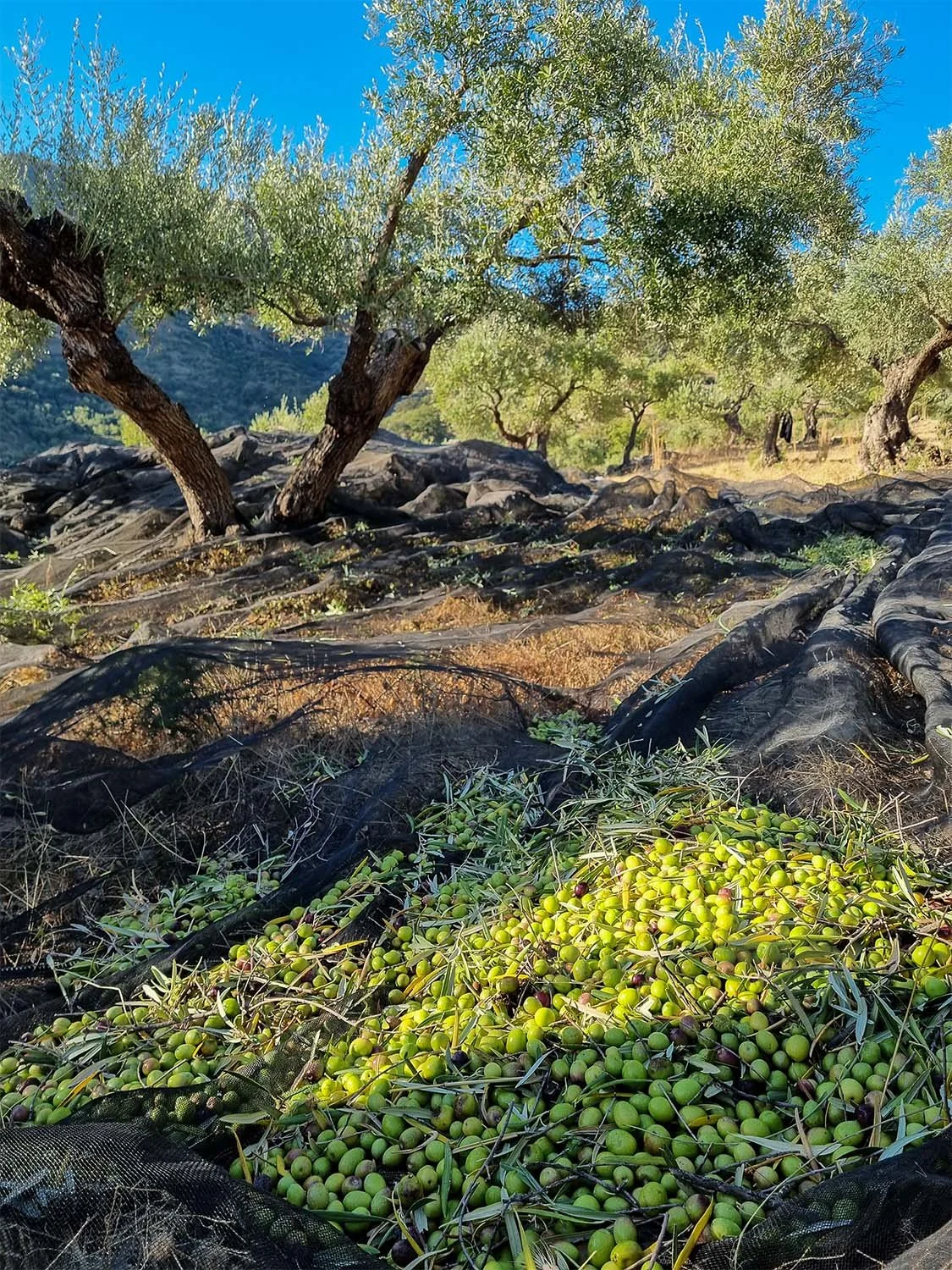
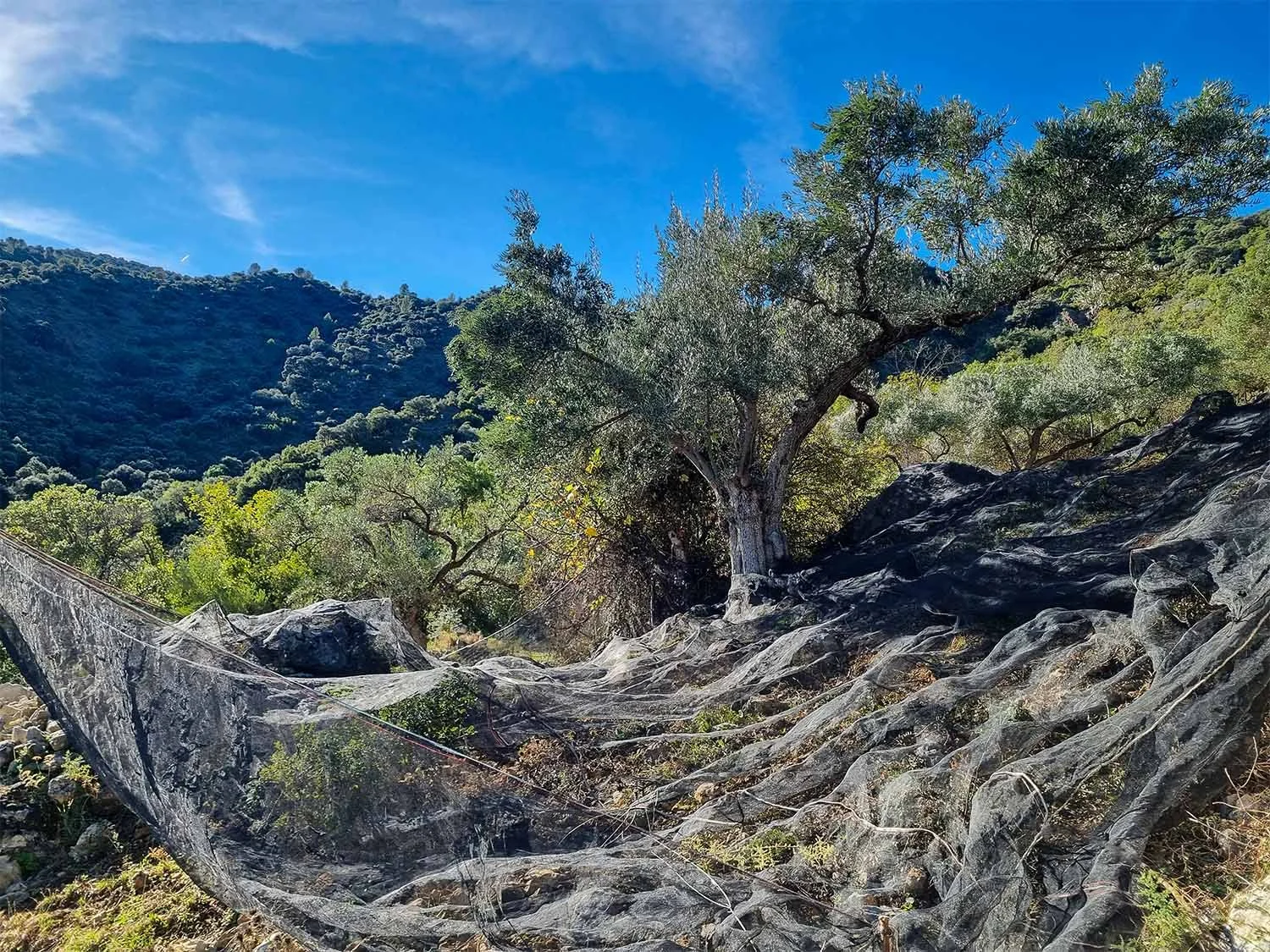
Las Covatillas — the smallholding — sits in the heart of the Sierra de Grazalema Natural Park, just outside the whitewashed village of Zahara de la Sierra in the province of Cádiz. The park is a UNESCO Biosphere Reserve, known for its Spanish fir forests, its hiking trails, and a biodiversity rare even by Andalusian standards. The olive trees grow on the steep slopes that ring the village, some of them centuries old. The combination of fertile soils, mountain altitude, and a microclimate shaped by Atlantic moisture and Mediterranean sun gives the cultivars — Manzanilla de Zahara and Lechín de Sevilla among them — a depth of character you only find when olives have to work for their light.
Regenerative Farming
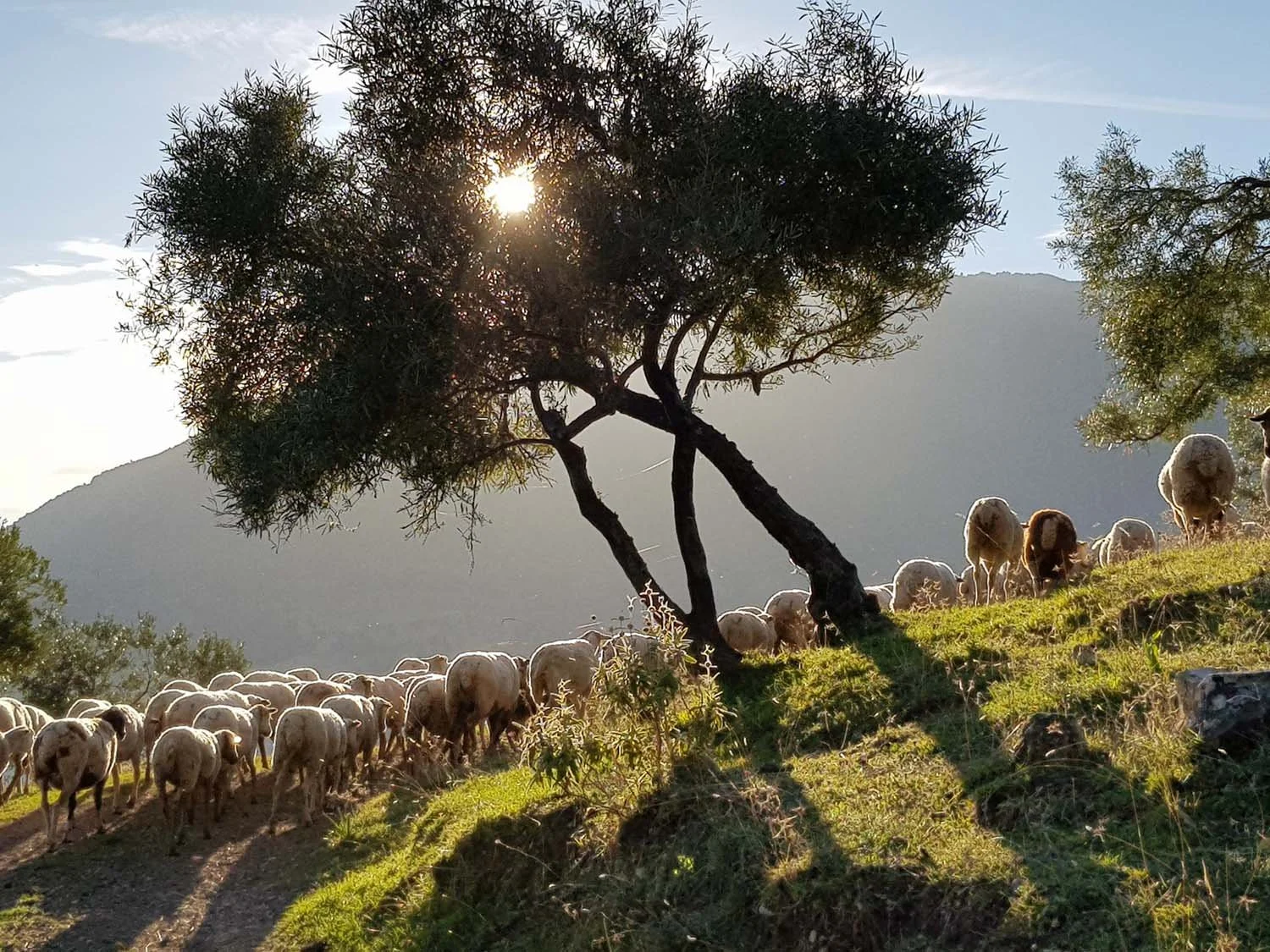
The family don't think of the grove as a crop. They think of it as a living system that happens to produce olives. Everything they do follows from that: ground cover left intentionally between the trees to prevent erosion and feed the soil; no synthetic chemicals, anywhere, ever; flowering plants encouraged for the worms, ladybirds, and birds that handle pest control for us. They work with local shepherds whose flocks graze the pasture and, in return, fertilise the land the way it has always been fertilised. Last year five hundred carob trees were planted alongside the olives — a drought-resistant species that absorbs carbon generously and adds another layer to the polyculture. None of this is for show. It is the slowest, most patient way they know to leave the land better than they found it.
The Harvest
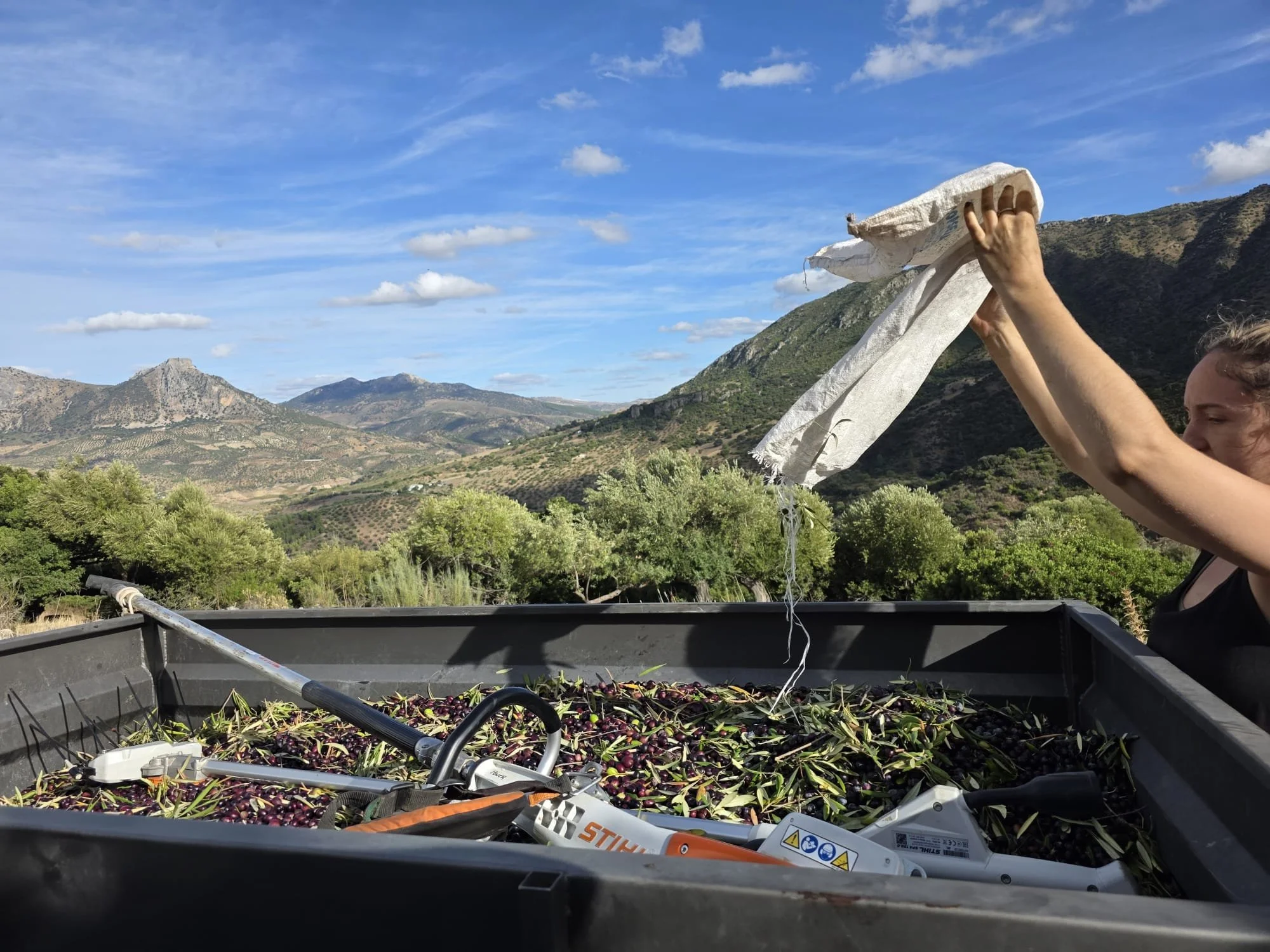
The harvest begins the moment we see the first reddish touches on the green olives — what is called veraison, the point at which the fruit stops growing and starts ripening. Pick before this moment and the oil lacks character; wait past it and the polyphenols start to drop. So we wait, watch, and pick by hand. Within hours of leaving the trees, the olives are crushed and cold-pressed at low temperature — no heat, no chemicals, no second press. The result is a yield that would horrify a commercial producer: roughly one litre of extra virgin olive oil from every eight kilos of olives. For us, the maths are simple. Less oil means better oil, and we would rather press a small amount of something singular than a large amount of anything else. We travel from the UK each year to join the harvest ourselves — the only honest way to know an oil is to help pick the fruit.
Visit The Farm
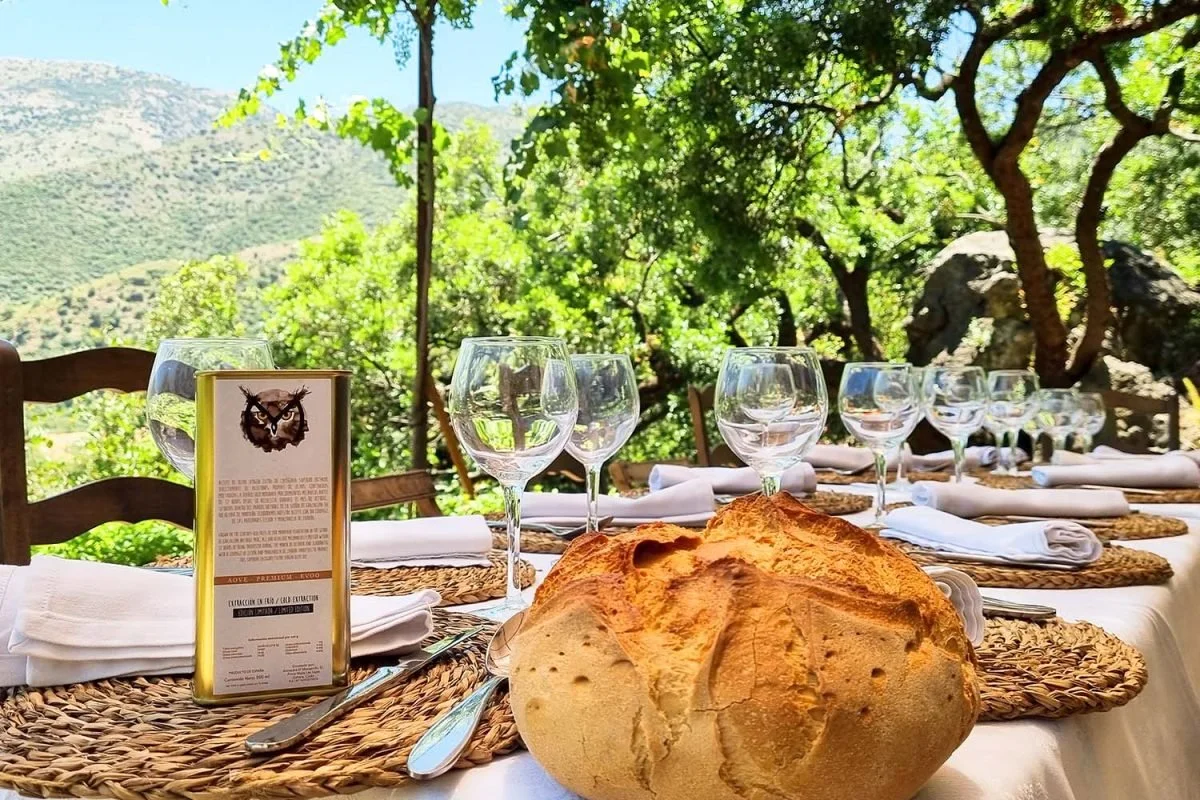
The farm is open to visitors, and the family welcomes anyone who would like to see where Aove Ando comes from. Through their olive oil tourism programme they offer walks among the centuries-old trees, tastings led by the family, and the chance to meet the people, the land, and the mountains that produce their oil. The Sierra de Grazalema has its own claim on you once you have spent a day in it — the fir forests, the limestone cliffs, the hiking trails, the white villages perched against the rock. If you would like to visit them, please get in touch using the form below.